

Can't switch off at night? Here's what your nervous system is actually trying to tell you
You know the feeling: You've been tired since 2pm, you've been looking forward to bed. You finally lie down, phone face-down, lights off - and your brain starts.
Old convos.
Tomorrow's to-do list.
Something mildly embarrassing you said in 2019.
The sound of the house settling (or was that something else?!).
Whether you locked the car.
This is one of the most common things women in their 30s and 40s describe to me. And almost universally, they frame it as a sleep problem. BUT, I wonder if we need to consider that it's more than likely a nervous system problem....and this distinction matters enormously for how you address it.
The two gears your nervous system operates in
Your autonomic nervous system has two primary modes:
Sympathetic - fight or flight. Activated by stress, threat, urgency, and by screens, notifications, mental load, and the relentless background hum of having a lot going on. This state raises cortisol and adrenaline, speeds up heart rate, sharpens focus, keeps you alert and reactive.
Parasympathetic - rest and digest. The gear your body needs to be in to fall asleep, digest food, repair tissue, and actually recover. This state is calm, slow, and quiet.
The problem for most busy, high-load women - and especially for ADHD brains - is that the sympathetic system is chronically overactivated. You spend all day running on stress hormones, moving from task to task, managing other people's needs, staying alert and responsive. And then you lie down and expect your nervous system to flip a switch.
It doesn't work like that. You can't go from 100km/h to parked in thirty seconds. Your body needs a transition.
Why ADHD brains feel this harder
ADHD nervous systems have what's sometimes described as difficulty with "arousal regulation" - not in the way that sounds, but in the neurological sense of shifting between states of alertness and calm.
Neurotypical brains have a natural deactivation process as the evening progresses. ADHD brains often don't. Stimulation remains stimulating. The brain keeps seeking input, keeps processing, keeps going - even when the body is exhausted.
This is compounded by something called "time blindness" - ADHD brains often don't have an intuitive felt sense of time passing, which means the wind-down period that neurotypical people experience naturally simply doesn't happen. You're operating at evening-level intensity until suddenly it's midnight.
The cortisol-melatonin relationship
Here's the biology that most sleep advice skips: cortisol and melatonin are inversely related. When cortisol is high, melatonin production is suppressed.
If your sympathetic nervous system is still activated when you're trying to sleep - if you're still in problem-solving mode, still reviewing the day, still slightly tense - your cortisol isn't dropping the way it should, and your brain isn't getting the signal to shift into sleep mode.
This is why sleep hygiene advice like "put your phone down an hour before bed" is genuinely correct. It's not about the blue light (though that's a factor). It's about stopping the stream of incoming stimulation that keeps your cortisol elevated.
What actually helps: a herbalist's evening protocol
Start earlier than you think you need to. Wind-down should begin at least 90 minutes before you want to be asleep. This feels like a lot, because it is lol, but it works,.
Nervine herbs for the nervous system directly. This is where traditional plant medicine is genuinely excellent. Nervines are herbs that have a direct calming effect on the nervous system - not sedating in the way pharmaceutical sleep aids are, but quieting and grounding.
My go-to evening herbs: passionflower (particularly good for the looping, busy mind), lemon balm (gentle, mood-softening, good for anxiety-driven wakefulness), and chamomile (the OG). These can be taken as teas or tinctures.
A warming evening tea recipe:
- 1 tsp dried passionflower
- 1 tsp dried lemon balm
- ½ tsp chamomile
- Steep in boiling water for 10 minutes, covered
- Drink 45–60 minutes before bed
- Add raw honey if desired
This tea is for the transition period - it's the ritual as much as the herbs.
Magnesium glycinate in the evening. Magnesium is essential for GABA function - the neurotransmitter that tells your nervous system to slow down. Most people are deficient. Glycinate is the form best absorbed and least likely to cause digestive issues. Taken 30–60 minutes before bed, it works as a genuine nervous system relaxant.
Temperature matters. Your body temperature needs to drop slightly to initiate sleep. A warm bath or shower 60–90 minutes before bed actually helps this process - it raises your surface temperature, which then drops as you cool, signalling to your body that sleep is coming. Simple and underused.
Wind Down PM and Sleep - how they fit here
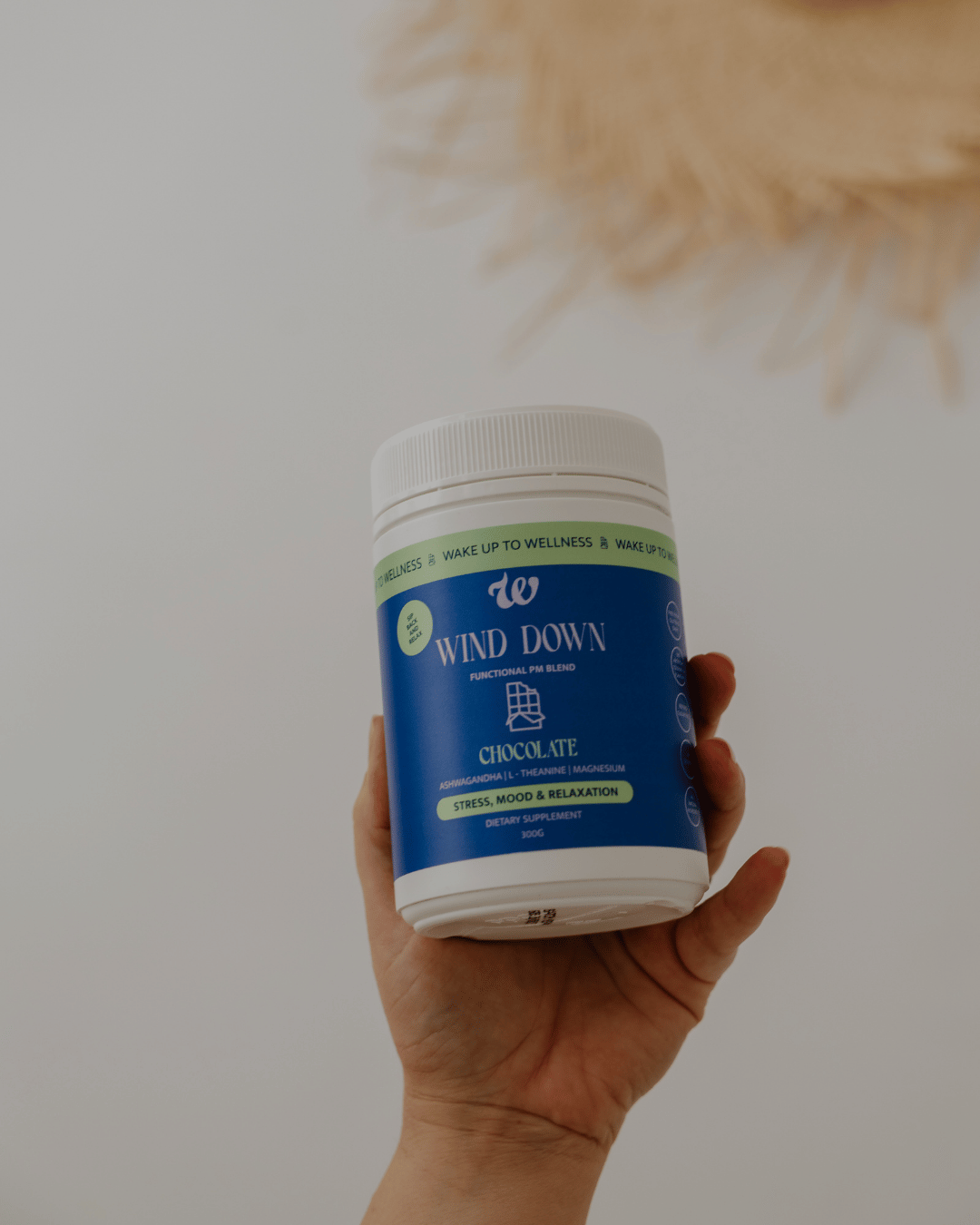
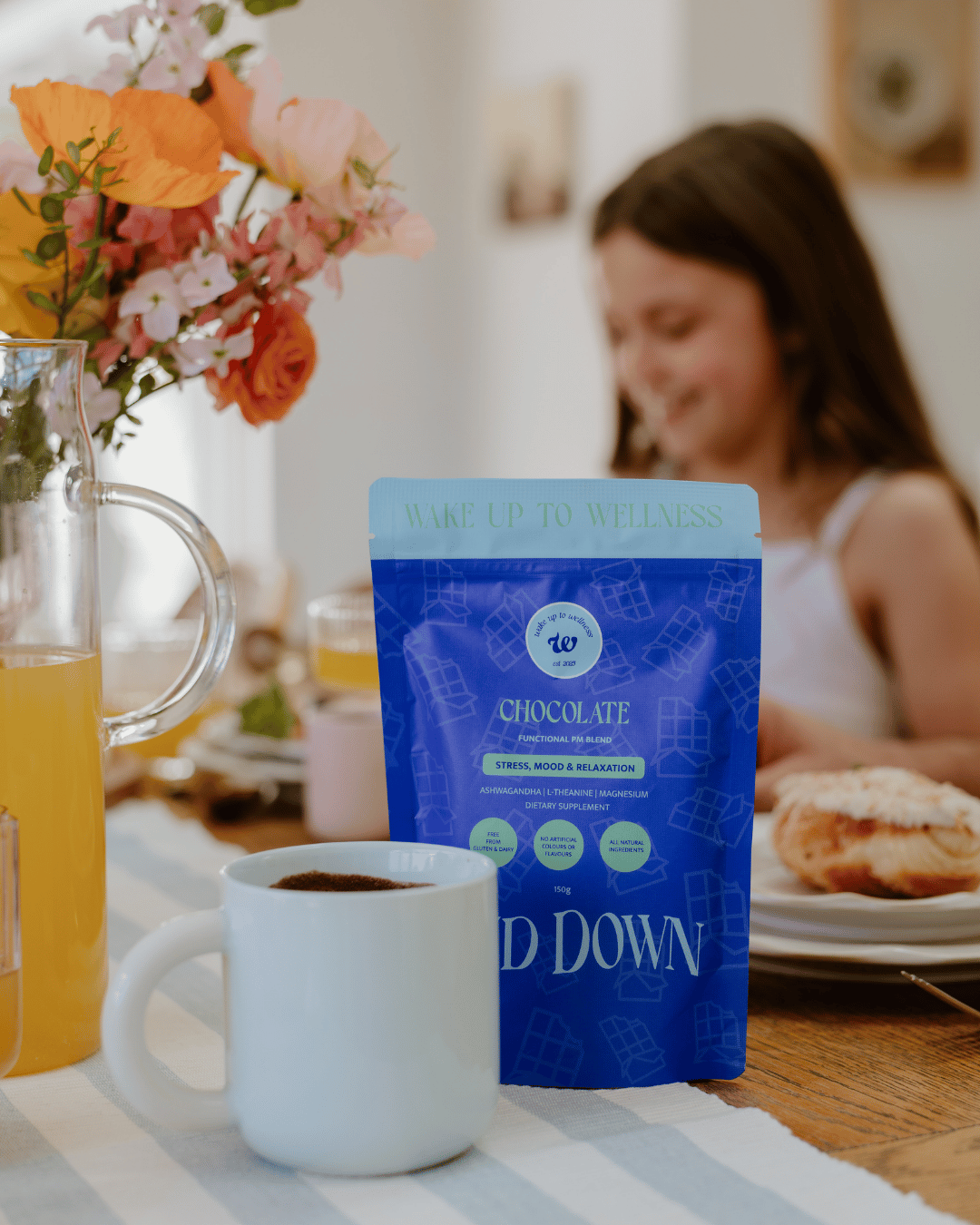
Our Wind Down PM blend was formulated specifically for the wired-but-exhausted pattern - the nervous system that needs support downregulating before sleep becomes possible. It combines ashwagandha KSM-66 for cortisol regulation, nervine botanicals for the busy mind, and magnesium bisglycinate for GABA support.
For those who need a further step - once the nervous system is calm but sleep itself is still difficult - our Sleep blend works on sleep onset and quality without melatonin, which we've deliberately excluded. More on why in our next post.
You're not necessarily shit at sleeping, your nervous system is doing exactly what it was designed to do given everything you're asking of it. The path to better nights starts with understanding - and then changing the signals you're sending your body in the hours before sleep.
Disclaimer: This content is educational and does not constitute medical advice. Please consult a healthcare provider if you have a sleep disorder or are taking medication.
Read more

Most of us are deficient by August and don't know it. Low vitamin D doesn't just affect your bones - it affects your mood, your energy, your immunity, and your sleep. Here's what to actually do abo...
Every winter I get asked what I actually take. Not what I sell - what I personally do. Here's my honest, unglamorous, genuinely effective winter protocol - including a recipe for you to try x
Leave a comment
This site is protected by hCaptcha and the hCaptcha Privacy Policy and Terms of Service apply.