



Why your nervous system is more dysregulated in winter (and it's not just the cold)
Every year, sometime around June, I notice it in myself before I even consciously register that winter has arrived.
I'm a little more reactive than usual. Things that wouldn't normally bother me land harder. My recovery time after a stressful event is longer. I'm more easily overwhelmed by noise, by demands, by the general volume of life. My nervous system feels - closer to the surface.
If this sounds familiar, let's just take a moment to remind ourselves that it isn't our mental health declining, and it isn't something we're imagining lol (it is very real hahhaa). There are specific, well-understood biological reasons why winter is harder on your nervous system - and they're compounded significantly if you have ADHD or a nervous system that already tends toward dysregulation.
Understanding the mechanism is the first step to doing something useful about it.
What nervous system dysregulation actually means
Dysregulation is a word that gets used a lot in wellness spaces, sometimes loosely. Here's what I mean by it specifically.
Your autonomic nervous system is constantly reading your environment and adjusting your internal state in response - your heart rate, your breathing, your muscle tension, your alertness, your emotional reactivity. When it's well-regulated, it moves fluidly between states: alert when you need to be, calm when the demand passes, able to recover from stress without getting stuck.
Dysregulation is when that fluidity breaks down. You get stuck in high-alert mode when there's no real threat. Small stressors trigger disproportionate responses. You can't shift gears. Recovery takes longer than it should. You feel simultaneously exhausted and unable to relax.
For ADHD nervous systems, this is already a baseline challenge - regulation is harder neurologically, because the prefrontal cortex (which helps moderate emotional and stress responses) is underactivated in ADHD. Winter adds several additional pressures on top of that existing vulnerability.
Reason 1: Less light = less serotonin
Serotonin is often described as a mood chemical, which undersells its role significantly. It's also a key regulator of your stress response, your emotional reactivity, and your ability to feel calm and grounded.
Your brain produces serotonin in response to light - specifically, bright natural light hitting your retinas in the morning. In winter, you may be waking before sunrise, spending most of the day indoors, and losing the light again by late afternoon. The cumulative effect is measurably lower serotonin production.
Lower serotonin doesn't just affect mood. It lowers your stress tolerance. Things that would normally feel manageable feel harder. Your emotional reactivity increases. Your capacity to absorb difficulty without being derailed shrinks.
For ADHD brains that are already managing emotional dysregulation as a core feature of the condition, this reduction in a key regulatory neurotransmitter is significant. It's not dramatic - it's subtle and cumulative, which is why it often isn't recognised for what it is.
What this means practically: Morning light exposure matters enormously in winter. Not sunbathing - simply being outside within an hour of waking, even on a grey day, for 15–20 minutes. Overcast daylight is still orders of magnitude brighter than indoor lighting and still stimulates the retinal photoreceptors that drive serotonin production. This is the single highest-leverage daily habit for winter nervous system regulation and it costs nothing.
Reason 2: Cold is a genuine physiological stressor
This one surprises people. Cold isn't just uncomfortable - it's a genuine stressor on your physiological system.
When your body is exposed to cold, your sympathetic nervous system activates. Vasoconstriction, elevated cortisol, increased adrenaline - the same stress response pathway that activates in response to threat or pressure. Your body is working harder to maintain core temperature, and that work has a physiological cost.
For most people, this is manageable. Your body adapts, the stress response is modest, and you barely notice it.
For a nervous system that's already running close to its stress threshold - which describes many people with ADHD, chronic anxiety, or high life load - the additional physiological burden of cold can be enough to push the system into a more reactive state. Your stress bucket is already fuller than average and the cold is one more thing pouring in.
This is also why the cold months tend to coincide with feeling more physically tense, more prone to tension headaches, more difficulty with body-based relaxation. Your muscles are literally holding more tension as part of the thermoregulatory response. That physical tension feeds back into your nervous system and keeps it more activated.
What this means practically: Warmth is regulatory, not just comfortable. Hot drinks, warm baths, heated spaces - these aren't indulgences. They're genuine nervous system support. The physiological shift from cold to warm activates your parasympathetic system. This is partly why a hot shower or bath before bed is one of the better-evidenced sleep interventions - it's not just about routine, it's about shifting your nervous system state.
Reason 3: Disrupted routine destabilises ADHD nervous systems specifically
ADHD nervous systems are unusually sensitive to routine disruption - not because of a character trait but because of how dopamine regulation works in ADHD brains.
Routine provides predictability, and predictability reduces the cognitive load required to navigate each day. When your environment is consistent and your day has a familiar structure, your brain can operate more efficiently - the executive function demands are lower, the transitions are smoother, the need for constant reorientation is reduced.
Winter disrupts routine in multiple ways. Shorter days shift the timing of light and darkness, which affects your circadian rhythm - the internal clock that regulates not just sleep but cortisol rhythms, hunger, alertness, and mood. School holidays and changed social schedules add unpredictability. Illness interrupts plans. The temptation to stay inside and abandon normal movement and meal routines is significant.
Each of these disruptions is small. Cumulatively, they create an environment where the ADHD nervous system is doing far more regulatory work than usual - and has fewer of its normal anchors to rely on.
This explains the particular flavour of winter dysregulation that many people with ADHD describe: not sad exactly, but untethered. Scattered. Like everything requires slightly more effort than it should and nothing feels quite settled.
What this means practically: Protecting a small number of non-negotiable daily anchors through winter matters disproportionately. Not by any means, a perfect routine - just a few consistent points in the day that your nervous system can predict eg A consistent wake time, a morning habit before the day gets complicated, maybe an evening ritual that signals transition. These anchors don't have to be elaborate, and while I would normally cry that consistency is a scam, we're going to try our best ok guys ?
Reason 4: Darkness shifts your nervous system toward threat detection
This is less discussed but super interesting from a neuroscience perspective.
Darkness is, evolutionarily, associated with threat. Before artificial light, night was when predators were active and humans were vulnerable. Your nervous system evolved with a mild but real shift toward heightened alertness and vigilance in low light.
In the modern context, spending more hours in darkness or dim light doesn't translate to actual threat - but it does maintain a subtle background activation of your threat-detection system. Your amygdala is slightly more reactive. Your system is slightly more primed for alarm.
Combined with lower serotonin, you have a nervous system in winter that is objectively more prone to perceiving threat, more reactive to potential danger, and less able to dismiss or downregulate alarm signals.
This is one of the reasons anxiety tends to worsen in winter even in people who don't experience classic seasonal depression. It's a different mechanism - not low mood, but heightened reactivity and a lower threshold for the nervous system to decide something is a problem.
What this means practically: Evening light matters as much as morning light, but differently. Bright overhead lighting in the evening keeps your cortisol elevated and delays melatonin production - the opposite of what you need for nervous system downregulation. Warmer, dimmer lighting in the two hours before bed works with your biology rather than against it. Candles, lamps, warm-toned bulbs are all on point.
TLDR: What helps - practically and directly
Morning light, every day. Outside within an hour of waking, 15–20 minutes minimum, regardless of cloud cover = this is foundational.
Warmth as a regulatory tool. Hot drinks in the morning, a warm bath or shower in the evening. Remember, we're Chinese baddies now.
A few consistent daily anchors. Same wake time, one consistent morning habit, an evening wind-down ritual. Pick three and protect them like they're your children.
Evening light environment. Dim, warm lighting after 7pm. Overhead big light off, thank you very much.
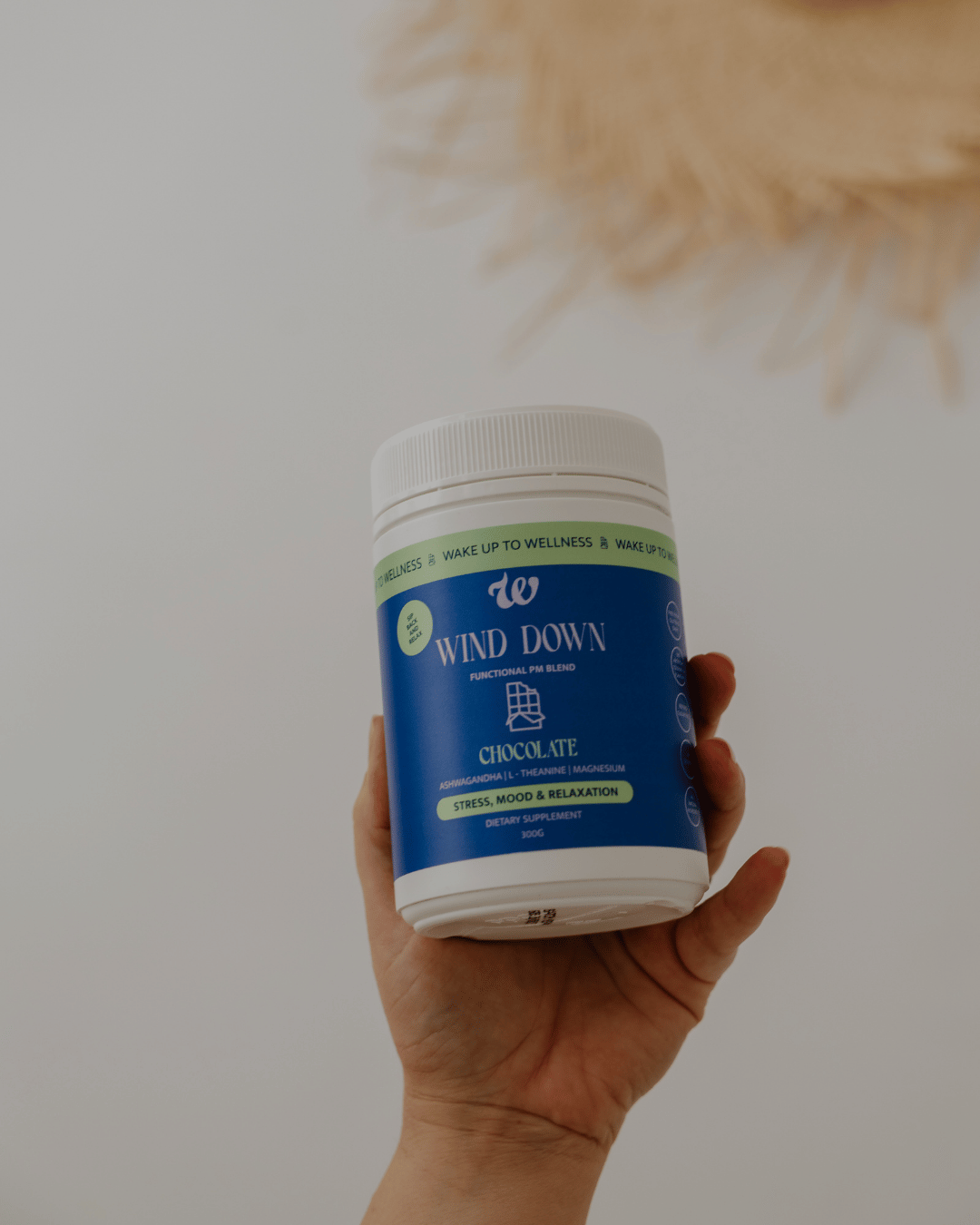
Adaptogenic support for the stress response. Winter is the time I think most carefully about HPA axis support - ashwagandha specifically, because cortisol dysregulation is so central to what winter does to the nervous system. This is precisely where Wind Down PM earns its keep: supporting the body's cortisol regulation and nervous system downregulation through the months when both are under the most pressure.
Sleep as a non-negotiable. Every mechanism described above is worsened by poor sleep. Serotonin production, cortisol regulation, emotional reactivity, stress tolerance - all of them are directly affected by sleep quality. This is not the season to underinvest in your sleep.
Winter is genuinely harder on your nervous system. That's not a personal failing - it's biology. But it's also biology you can work with once you understand what's driving it.
The goal isn't to feel exactly the same in July as you do in January. It's to give your nervous system enough support that it stays within a range you can function in - regulated enough to be present, to recover from hard things, to feel like yourself even when the season is working against you. We're aiming for functional > mental breakdown era.
Disclaimer: This content is for educational purposes and does not constitute medical advice. If you are experiencing significant mood changes or anxiety, please speak with your healthcare provider.
Leave a comment
This site is protected by hCaptcha and the hCaptcha Privacy Policy and Terms of Service apply.