It's a classic expectation vs reality piece: you book a holiday, take your annual leave, look forward to relaxing and quality family time... but the reality when you get there is that you're still very much wired. It's hard to sit still, to sink into the chill, your mind is still busy even if you're forcing your body to stop.
This reality is even more so for neurodivergent people and chronically stressed adults.
Ooph.
SO WHAT'S GOING ON?
The hard truth is: your nervous system doesn’t instantly downshift just because life slows down.
When you’ve been in a chronic state of activation - juggling work, kids, deadlines, emotional load - your stress chemistry doesn’t evaporate the moment routine stops.
Cortisol stays elevated, vigilance stays high, and your body keeps scanning for what’s next because that’s what it has been trained to expect. This is why stillness can feel uncomfortable or even unsafe at first - if anything, it almost is like you're having withdrawal symptoms from the stress.
Your system isn’t malfunctioning - it’s protecting you based on what it knows. It's trying to hold onto the familiar.
It takes time, nourishment, and safety cues for the body to realise it no longer needs to operate in survival mode.
The first few days of a break can feel nothing like rest. You might feel wired, restless, emotional, foggy, or unable to slow down. You’re exhausted, but your body won’t let you switch off. And let's not forget the guilt - “Why can’t I relax?”
Answer: Your stress cycle just hasn’t completed yet. When your system is used to running hot, calm doesn’t feel natural right away.
WHY IT'S HARDER FOR NEURODIVERGENT PEOPLE
For ND adults, the nervous system sits closer to the edge of hyperarousal - our baseline for stress within our body runs higher than others.
Which means even positive changes in pace can feel jarring.
Sensory input is processed more intensely, transitions are neurologically heavier, and sudden drops in structure can feel like losing the scaffolding that keeps everything upright.
Dopamine patterns also play a role - without the usual sources of stimulation, motivation and mood can dip sharply, making rest feel uncomfortable rather than restorative.
This is why rest isn’t passive for ND people; it’s an active process of helping the body feel safe enough to soften.
WHY IT TAKES TIME TO DOWNSHIFT
There’s no universal “10-day rule,” but many people start to feel a genuine shift around days 5–7 - not because the holiday finally “kicks in,” but because their physiology has had enough uninterrupted time without new stressors to stop bracing for impact.
Downshifting isn’t about how long you’ve been away; it’s about how much load your body was carrying before you stopped. For some, that load dissolves quickly. For ND adults and chronically overwhelmed parents, it can take much longer.
Recovery isn’t linear, and it’s never one-size-fits-all - it’s a reflection of what your system has been holding, not a reflection of how well you’re “resting.”
BUT considering that the average holiday is a week in length, it's helpful knowing this and then helping your nervous system downshift faster so you actually get to ENJOY your holiday (rather than spending the whole holiday unwinding just to be relaxed enough to head back to work)
WHAT HELPS YOUR NERVOUS SYSTEM DOWNSHIFT FASTER
- Lower sensory load
- Predictable rhythm
- Adequate food (protein + carbs)
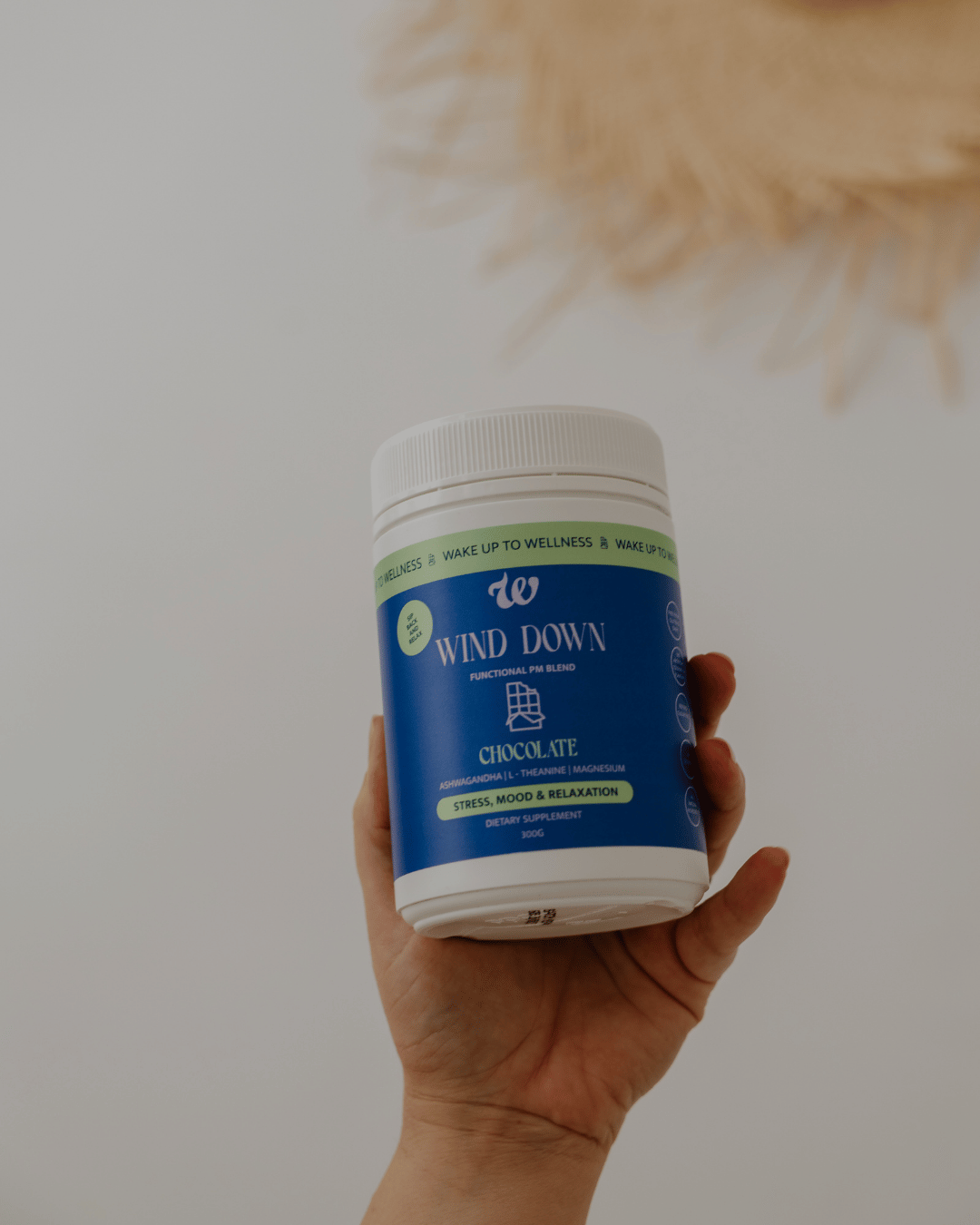
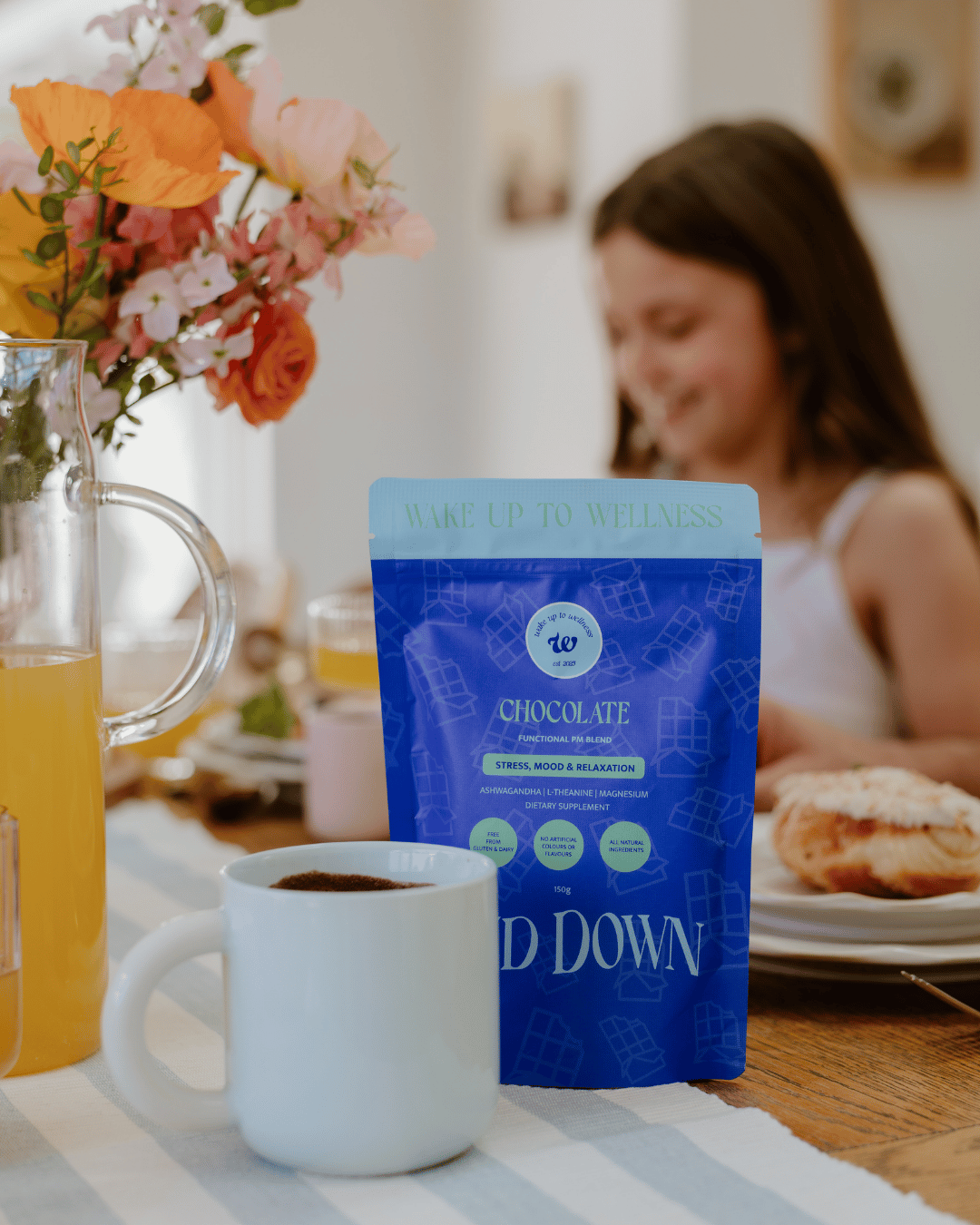
- Supplements to support - think magnesium, bacopa, lemon balm (found in Wake Up AND Wind Down)
- Sunlight
- Movement
- Time alone
- Gentle support on stressful days
Small shifts > discipline.
WHY WE EXPECT IMMEDIATE CALM + THE GOOD NEWS
We’ve been raised to believe that rest should feel instantly soothing, but most of us are carrying cultural conditioning that makes relaxation something we perform rather than experience. Toxic productivity, perfectionism, and “rest guilt” create a pressure to feel calm on demand - as if switching off is a moral achievement rather than a biological process.
So when your body doesn’t immediately soften, it’s easy to think something is wrong with you. But here’s the good news: nothing is wrong. Your body is simply adapting. As your system senses safety, load decreases and capacity naturally returns. Calm isn’t a performance - it’s a state your nervous system grows into when the conditions allow it.
TL;DR lols
A holiday doesn’t relax you.
Your nervous system does - once it has the support, safety, and space it’s been asking for.
Amy xx





Leave a comment
This site is protected by hCaptcha and the hCaptcha Privacy Policy and Terms of Service apply.